Most Ideas Don't Survive This
📰 Episode Snapshot
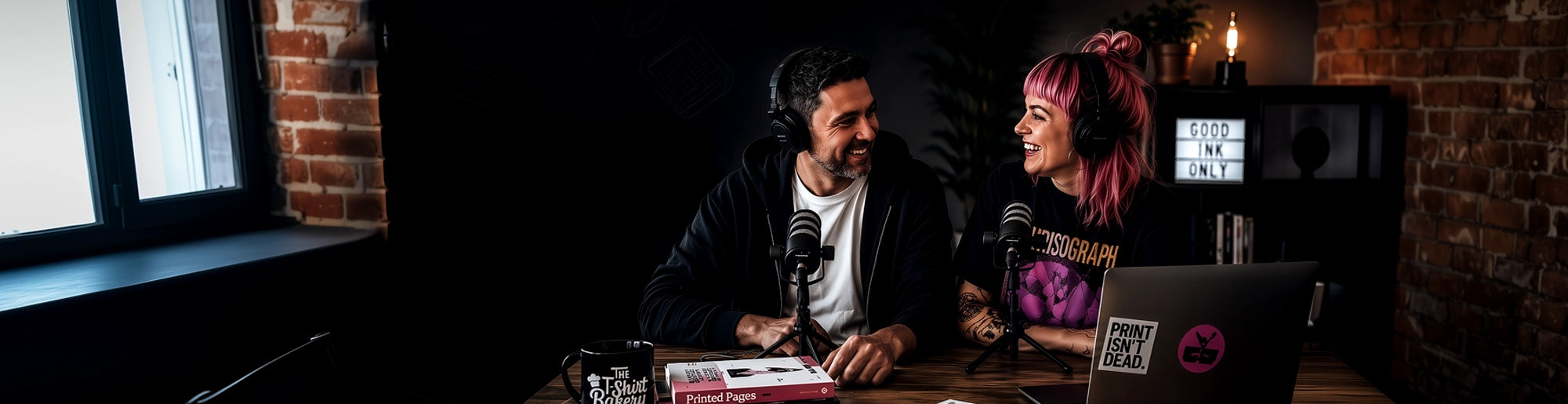
Why do some ideas survive reality while others collapse once they are tested? In this episode, Matt and Jodie explore creativity, constraints, execution, and why ideas often look strongest before the real world gets involved. The conversation looks at freedom, validation, production costs, durability, and why reality is where creativity proves itself.
💡 Episode Insights
- Constraint does not create quality. It reveals whether quality was there in the first place.
- Freedom helps people discover ideas, but reality shows whether those ideas are actually strong.
- Modern tools make it easier to generate more concepts, but more versions do not automatically mean better ideas.
- Strong ideas survive different formats, uses, costs, production limits, and real-world conditions.
- Launch excitement can create confidence before an idea has been properly tested.
- The strongest ideas survive the journey from concept to reality without losing themselves.
📖 Read the Editorial
Why Great Ideas Need Friction →
Creativity & Strategy
Why do some ideas become stronger when they encounter resistance while others collapse? This editorial explores why friction is not the enemy of creativity, but the mechanism that reveals whether an idea has the strength to survive real-world pressure.
🎧 Listen Next

📄 Transcript
Get the full conversation below.
JODIE: “Welcome to The T-Shirt Bakery Podcast — where we explore the future of print, apparel, branding, and the operational shifts shaping the industry.”
I think creative people have a slightly unhealthy relationship with constraints.
MATT:
What, as in they hate them?
JODIE: “Welcome to The T-Shirt Bakery Podcast — where we explore the future of print, apparel, branding, and the operational shifts shaping the industry.”
I think creative people have a slightly unhealthy relationship with constraints.
MATT:
What, as in they hate them?
JODIE:
“Welcome to The T-Shirt Bakery Podcast — where we explore the future of print, apparel, branding, and the operational shifts shaping the industry.”
I think creative people have a slightly unhealthy relationship with constraints.
MATT:
What, as in they hate them?
JODIE:
Pretty much.
The second something becomes harder, more expensive, or more restrictive, the reaction is usually:
"That's ruining the idea."
MATT:
Yeah.
I think that's true.
Although I think people sometimes misdiagnose what's happening.
JODIE:
What do you mean?
MATT:
Well... sometimes the restriction is damaging the idea.
That absolutely happens.
But sometimes the restriction isn't damaging anything.
It's exposing something.
JODIE:
That's a very different claim.
MATT:
Completely different.
Because if an idea only works when every condition is perfect, I'm not sure the idea was ever as strong as people thought.
JODIE:
See, I still think creative people need freedom though.
MATT:
They do.
I don't think you discover good ideas through restriction.
That's not really how creativity works.
You need a period where you're exploring. Trying things, following ideas that might go nowhere, making mistakes. Some of those bad decisions are actually useful because they're how you discover what doesn't work.
JODIE:
So we're not anti-freedom then.
MATT:
Not remotely.
Actually, I think that's where people get confused.
Freedom and validation are different things.
Freedom helps you discover ideas.
Reality helps you find out whether they're any good.
JODIE:
That's a much harsher sentence.
MATT:
Maybe.
But I think it's true.
And honestly, the older I get, the more I think the testing part matters.
JODIE:
Why?
MATT:
Because I've watched so many ideas look incredible before reality got involved.
And then reality shows up and suddenly you're having a completely different conversation.
JODIE:
That sounds suspiciously like experience talking.
MATT:
Unfortunately, yes.
JODIE:
Go on then.
MATT:
Actually, this takes me right back to university.
When I was studying design, we were constantly working inside constraints.
And before anybody says it—
JODIE:
That was quite a long time ago now, wasn't it, Matt?
MATT:
Thank you, Jodie.
JODIE:
[laughs]
MATT:
Always nice to feel supported.
JODIE:
Just helping people establish the historical timeline.
MATT:
Very thoughtful of you.
But seriously, it was a different environment.
Computer-aided design existed, but nothing like it does now. The tools were far more limited, production was more limited, and even the way projects were taught was different.
You'd often be given restrictions that felt incredibly frustrating at the time.
Maybe you were limited by colour. Maybe the print process imposed certain constraints. Sometimes the brief itself would deliberately box you into a particular way of working.
And honestly, as a student, I hated some of it.
Because all I could see were the options I didn't have.
JODIE:
Which is exactly how most people still react to constraints.
MATT:
Yeah, because it feels like somebody's taking something away from you.
What I didn't understand back then was that the restrictions weren't really the lesson.
The lesson was learning how to make decisions.
When you've got unlimited options, it's surprisingly easy to avoid committing to anything. You can keep tweaking, keep adding, keep changing direction.
But when the options start narrowing, eventually you're forced to confront a much more uncomfortable question:
Is the idea itself actually working?
JODIE:
That's interesting because modern tools almost let people avoid that question.
MATT:
And look, I wouldn't swap the tools we have today for anything. They're incredible.
But there's a trade-off.
Students now can generate more concepts in an afternoon than we probably explored in weeks. The upside is obvious — you can explore ideas much faster. The danger is that sometimes quantity starts looking like progress.
JODIE:
What do you mean by that?
MATT:
Well, having twenty versions of something doesn't automatically make the idea stronger.
Sometimes it just means you've got twenty versions.
The difficult part is deciding which version actually deserves to survive.
And that's where the logo example comes in for me.
The logos people remember tend to be remarkably simple.
Not because simplicity is fashionable.
Because simplicity survives.
The moment a design has to work in different situations, across different formats, under different conditions, all the unnecessary stuff starts getting stripped away.
And what you're left with is the actual strength of the idea.
That's why I think good constraints can be useful.
Not because they improve the idea.
Because they reveal whether there was a strong idea there to begin with.
JODIE:
You can keep improving the presentation.
MATT:
Endlessly.
You can spend weeks refining mockups, adjusting visuals and polishing the surface. And none of that's bad.
But eventually reality still turns up.
JODIE:
Reality sounds like the villain in this conversation.
MATT:
That's the funny thing.
I don't think reality's the villain at all.
I think reality's the first honest conversation the idea ever has.
JODIE:
That's a good line.
MATT:
Think about logos.
People often look at strong logos and say:
"Oh, it's simple."
I don't actually think simplicity is the achievement.
JODIE:
What is then?
MATT:
Durability.
The logo survives.
That's the achievement.
Because eventually somebody uses it in ways the designer never imagined.
Maybe somebody shrinks it down until it's barely visible. Maybe it ends up embroidered somewhere the designer never expected. Maybe it gets reproduced badly years later.
Whatever happens, some logos just keep working.
Others don't.
JODIE:
So the pressure reveals the quality.
MATT:
Exactly.
And that's the bit I think people miss.
Constraint doesn't create quality.
It reveals it.
The quality was either there or it wasn't.
JODIE:
That's probably the strongest observation in the whole discussion.
MATT:
I think so too.
Because it applies way beyond design.
JODIE:
How far beyond?
MATT:
Well think about how easy it is now to start things.
You can build a brand faster than ever, launch products faster than ever, and make something look incredibly convincing in a remarkably short space of time.
And honestly, that's brilliant.
I wouldn't want to lose any of that.
JODIE:
But.
MATT:
But the internet made ideas easier to generate.
Reality did not become easier.
JODIE:
There's something annoyingly true about that.
MATT:
Because it's uncomfortable.
The starting line moved.
The finish line didn't.
JODIE:
That's good.
Although surely some things genuinely are easier now?
MATT:
Oh, absolutely.
If you wanted to launch a clothing brand twenty years ago, the barriers were massively higher.
Today you can build a website in an afternoon. You can create product visuals without a photoshoot. You can get products online incredibly quickly.
Those things genuinely are easier.
JODIE:
So where's the catch?
MATT:
The catch is that easier access doesn't automatically create stronger ideas.
It just means more ideas get the opportunity to exist.
And that's a good thing, by the way.
I wouldn't want to go backwards.
JODIE:
But existence isn't proof.
MATT:
Getting to the starting line became easier.
Proving the thing actually works didn't.
Launching something is one thing.
Discovering whether it still makes sense six months later is something else entirely.
That's where a lot of ideas find out what they're really made of.
JODIE:
So when you say reality, you're not just talking about design then.
MATT:
No.
Honestly, one of the most common versions of this I see is cost.
People will come to us with an idea that's genuinely exciting.
And visually there's nothing wrong with it.
The problem is they've accidentally designed a manufacturing process rather than a product.
JODIE:
What do you mean by that?
MATT:
Well they'll imagine prints running over seams, different coloured collars, custom panels, all sorts of things that look fantastic in a mockup. Printing in places standard garments aren't really designed to be printed.
And none of that's impossible.
The issue is that every one of those decisions has a cost attached to it.
The creative idea still works.
The economics are suddenly having a vote as well.
JODIE:
So the reality isn't that the idea was bad.
It's that the production model changed.
MATT:
Exactly.
Or the retail price changed.
(tiny chuckle)
Sometimes both.
Or sometimes it's a startup brand.
Nobody knows who they are yet, but they've designed a garment covered in prints because they're imagining the finished vision.
What they haven't thought about is the retail price that vision creates.
And that's where reality starts joining the conversation.
Because customers don't just evaluate the design.
They evaluate the price as well.
JODIE:
Because attention arrives before proof now.
MATT:
And that's where people get trapped.
An idea can start feeling successful long before it's actually been proven.
The launch goes well. The presentation looks good. Early feedback is encouraging.
And none of that's fake.
The problem is that those signals can create confidence before the idea has really been tested.
Then six months later reality starts asking questions.
JODIE:
Like what?
MATT:
Well...
The obvious question is whether people come back.
Anybody can create excitement around a launch.
The harder question is what happens afterwards.
Does the product still make sense once the novelty disappears?
Does the business still hold together once it becomes routine instead of exciting?
That's where ideas start finding out whether they're actually durable.
JODIE:
Translation?
MATT:
Yeah.
The move from concept into reality.
A sketch eventually becoming a garment. An idea turning into an actual product somebody can buy. A vision becoming something that has to survive in the real world.
That's the journey I'm talking about.
The strongest ideas survive that journey without losing themselves.
JODIE:
Whereas weaker ideas depend on perfect conditions.
MATT:
Usually.
And that's why I think people misunderstand constraints.
The goal isn't to protect the idea from reality.
The goal is to find out what's left once reality gets involved.
JODIE:
That's a much better way of framing it.
MATT:
Because reality isn't the enemy of creativity.
Reality is where creativity proves itself.
JODIE:
Matt, thank you.
MATT:
It's been a pleasure - I suspect anybody who's ever tried turning an idea into something real knows exactly what that feels like.
JODIE:
And thanks to everybody listening to The T-Shirt Bakery Podcast.
If you're looking for custom apparel, branded merchandise, or print support for your own projects or business, you can find us online at The T-Shirt Bakery.
We'll see you in the next episode.
-
Posted in
Creative Identity, Design Culture