
Why Clothing Became the Internet’s Favourite Creative Medium
|
📚 In This Editorial 🌐 Internet Clothing Culture |
🧠 Cultural Themes 👕 Online Identity, Offline |
🌐 The Internet Didn’t Just Change Fashion — It Changed Clothing Culture
Modern e-commerce has changed far more than how clothing gets marketed or sold.
It changed what clothing culturally represents.
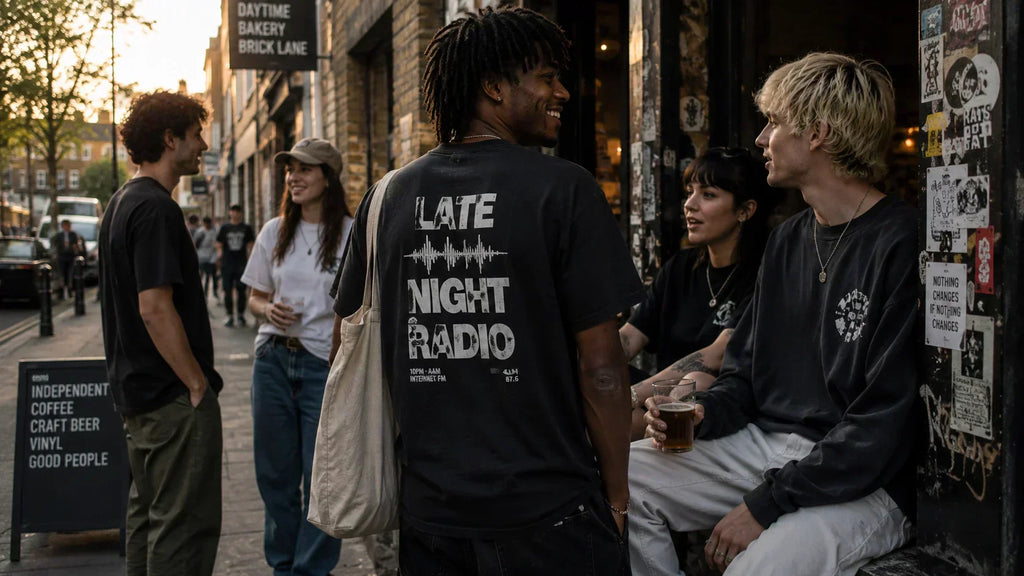
Apparel increasingly functions less like traditional fashion and more like wearable communication. Graphics, slogans, references, creator merchandise, niche aesthetics, and highly specific visual languages now operate as forms of identity that signal and move fluidly between online and physical spaces. Clothing no longer simply reflects personal taste. Increasingly, it communicates internet fluency, humour, affiliation, aesthetic alignment, and participation in digitally native communities.
The internet fragmented culture into thousands of visible micro-identities, and apparel became one of the easiest ways to make those identities physically recognisable.
That shift transformed the commercial structure surrounding clothing itself.
People increasingly discover belonging through creators, algorithms, fandom ecosystems, niche humour, online aesthetics, and highly specific communities rather than broad mainstream culture. As those affiliations became more fragmented online, clothing naturally evolved into a physical extension of them offline.
Modern e-commerce infrastructure dramatically accelerated the shift. Print-on-demand systems, creator storefronts, Shopify ecosystems, and social commerce platforms made identity-driven apparel commercially viable at a scale traditional retail systems could never realistically support. Small but highly aligned audiences suddenly became commercially meaningful because brands no longer needed mass-market appeal to sustain themselves.
The internet did not simply create more clothing brands.
It transformed apparel into a cultural language system shaped by online behaviour.
The rise of creator merchandise partly explains why the shift feels so culturally visible now. A generation raised inside digital ecosystems increasingly sees clothing not simply as style, but as participation. People wear references, creators, aesthetics, humour, communities, and internet-native affiliations that would have felt too niche for commercial success in earlier retail eras.
Clothing became one of the internet’s favourite ways to make an invisible online identity physically visible.
🗣️ From Fashion to Wearable Communication

Modern apparel often communicates long before somebody speaks.
A hoodie referencing a niche internet joke, a typography-led shirt built around a very specific aesthetic, or a creator merchandise drop tied to an online community all operate differently from traditional fashion branding. The garment itself becomes shorthand for recognition. People increasingly wear signals designed to be understood by the right audience rather than everyone.
Internet culture rewards recognisable references.
That behavioural shift changed how clothing functions socially, as apparel increasingly serves as a communication infrastructure for digitally native communities. Clothing now frequently communicates humour, internet literacy, fandom affiliation, creator alignment, aesthetic preference, or community belonging before any conversation actually begins.
Older retail systems largely depended on broad appeal.
Modern internet culture often rewards specificity instead.
That distinction matters commercially because e-commerce no longer relies entirely on reaching the largest possible audience. Niche recognition became a viable business infrastructure. A highly specific audience can now sustain an apparel ecosystem online because e-commerce systems have dramatically reduced the barriers surrounding production, fulfilment, and audience targeting.
The rise of meme apparel, creator merchandise, fandom clothing, and reference-heavy products clearly reflects that shift. Many garments now function less like traditional fashion statements and more like wearable references intended for immediate recognition by culturally aligned audiences.
Recognition Itself Became Part of the Value
That helps explain why some internet-native apparel can feel confusing outside its community. Certain products do not aim for universal readability. They aim for selective recognition. The “right people” understanding the reference often matters more than broad accessibility.
Internet culture also changed the pace at which these signals evolve. Online communities continuously produce new aesthetics, jokes, symbols, references, and affiliations. Apparel increasingly absorbs those signals in real time because e-commerce infrastructure now allows clothing systems to move almost as quickly as internet culture itself.
The strongest modern apparel brands increasingly understand that they are not simply designing products.
They are designing recognisable cultural signals for highly specific communities.

🧩 The Internet Fragmented Culture Into Micro-Identities
The internet no longer rewards broad sameness as older media systems once did.
Algorithms increasingly push people toward highly specific interests, aesthetics, creators, humour styles, and communities that gradually shape a sense of belonging in far more fragmented ways than traditional mass culture ever allowed. Two people using the same platform may experience completely different versions of the internet, depending on the creators, aesthetics, and ecosystems that shape their feeds daily.
Everybody Now Lives Inside Slightly Different Internets
That fragmentation profoundly changed apparel culture because clothing became one of the easiest ways to externalise those affiliations physically.
TikTok aesthetics, fandom ecosystems, gaming culture, anime communities, gym culture, internet humour, design subcultures, and highly specific visual aesthetics all now influence apparel in ways that would have been commercially difficult to sustain under older retail systems. Many modern clothing brands operate less like traditional fashion companies and more like community ecosystems built around shared recognition and aesthetic alignment.
People increasingly construct themselves through layered affiliations rather than singular mainstream categories.
The Internet Accelerated Identity Stacking
Someone may simultaneously align with:
- a creator community
- a gaming culture
- a music niche
- a fandom ecosystem
- a visual aesthetic
- a humour style
- a niche online subculture
Apparel naturally became one of the easiest ways to make those layers visible.
Commentary around Gen Z identity behaviour from The Drum’s analysis of fragmented and fluid identity systems reflects part of this broader cultural shift. Belonging increasingly resembles less a fixed category and more an evolving combination of communities, aesthetics, references, and affiliations, continuously shaped within digital environments.
E-commerce infrastructure quietly enabled the commercial side of that transformation.
Print-on-demand systems, creator storefronts, and Shopify-based commerce made micro-identity apparel businesses economically viable. Tiny but highly aligned audiences suddenly became sufficient to sustain apparel businesses, as brands no longer needed traditional retail distribution to survive.
The internet fragmented culture.
Apparel became one of the clearest ways people learned to wear those fragments publicly.
🎯 Why the Internet Rewards Specificity Instead of Mass Appeal

Traditional retail systems depended heavily on broad appeal because production, inventory, and distribution costs made it commercially difficult to serve niche audiences efficiently. Large brands needed products capable of reaching huge numbers of consumers simultaneously.
Internet commerce changed those economics completely.
Modern ecommerce systems reward specificity because online communities naturally organise around shared humour, aesthetics, references, creators, and affiliations. Small but highly aligned audiences often create stronger engagement than broader but emotionally disconnected audiences.
That behavioural shift transformed apparel particularly aggressively because clothing operates so effectively as visible community signalling.
Gym brands, fandom apparel, creator merchandise, internet-irony clothing, hyper-specific typography products, and aesthetic-led micro-brands all reflect the same broader commercial reality: internet culture rewards recognisable alignment more than broad neutrality.
Specificity Creates Emotional Efficiency
People increasingly buy products that make them feel recognised by the right audience rather than simply visible to the largest audience. Algorithms reinforce that behaviour continuously because digital platforms naturally cluster users into highly specific cultural ecosystems where niche references become socially valuable.
The creator economy accelerated the shift further. According to Grand View Research’s creator economy market report, creator-led commerce continues to expand rapidly as audiences increasingly build stronger relationships with creators and communities than with traditional media systems. Apparel became one of the most natural monetisation layers within those ecosystems because clothing already functions publicly and socially in ways many other products do not.
Many creator-led brands now operate less like fashion companies and more like wearable community systems.
That distinction explains why highly niche apparel can perform extremely well online despite appearing commercially strange through older retail logic. The internet does not necessarily reward broad cultural neutrality anymore. More often, it rewards highly recognisable alignment inside specific ecosystems.
The strongest modern apparel brands increasingly understand that community resonance matters more than generic visibility.
Products do not always need everybody to understand them.
They often need the right people to recognise them immediately.
👕 Clothing Became a Physical Extension of Online Identity

Digital affiliation no longer stays fully online.
The boundaries separating online and offline identity became increasingly blurred as internet culture moved deeper into everyday life. Clothing naturally evolved alongside that shift because apparel already functions as one of the most visible forms of social communication people carry into physical environments.
Modern clothing increasingly behaves like a physical extension of digital belonging.
Creator merchandise illustrates the shift particularly clearly. Audiences often buy creator apparel not simply because they like the design itself, but because the garment represents familiarity, participation, alignment, and emotional connection to a particular online ecosystem. The clothing becomes a wearable extension of community membership.
That behaviour extends far beyond creators alone.
Aesthetic affiliation increasingly behaves similarly. People wear internet-native humour, niche references, community symbols, and highly specific visual languages because digital culture has trained identity to function through visible signals. Many products now operate as forms of cultural shorthand designed for recognition by specific audiences rather than universal readability.
Commentary on the growing “superfan economy,” as reflected in Vogue’s analysis of community-driven consumer behaviour, reflects how emotionally connected audiences increasingly are to creators, communities, and shared cultural ecosystems. Apparel fits naturally into those systems because clothing already functions publicly and socially in ways many other products do not.
The internet also normalised continuous identity curation.
Profiles, aesthetics, playlists, avatars, fandoms, creator affiliations, and online communities all contribute to how people construct themselves socially online. Clothing increasingly became one of the easiest ways to translate those affiliations into physical environments without needing explanation.
People often wear familiarity, humour, belonging, and alignment without consciously framing the behaviour in those terms.
The strongest apparel brands increasingly understand that modern consumers are not simply buying garments.
They are buying emotionally recognisable community systems connected to the cultures shaping their lives online.
🤝 The Best Modern Apparel Brands Understand Community First

The strongest modern apparel brands increasingly succeed through community resonance rather than mass visibility.
That distinction matters because internet-native commerce behaves very differently from older retail systems. Audiences now often connect more deeply with brands that feel culturally fluent, emotionally recognisable, and community-aligned than with brands attempting to appeal to everybody simultaneously.
Modern Apparel Increasingly Functions Like Community Infrastructure
Shared humour, recognisable aesthetics, creator alignment, fandom participation, emotionally resonant visual systems, and culturally familiar references all help brands build stronger relationships with highly specific online audiences. Many successful e-commerce apparel businesses no longer operate purely as product companies. More often, they function as ecosystems where audiences feel culturally understood.
That behaviour explains why some smaller brands outperform much larger competitors online despite having far less overall visibility.
Recognition Creates Emotional Gravity
Community-first apparel brands often feel stronger because audiences see themselves reflected in the humour, references, aesthetics, and visual language of the products. Generic branding struggles in internet-native commerce partly because online audiences increasingly reward recognisable alignment and cultural fluency instead of broad neutrality.
The internet did not simply change how brands market clothing.
It changed what clothing culturally represents.
Modern apparel increasingly functions as wearable communication shaped by online affiliations, creator ecosystems, community behaviour, and digitally fragmented culture. Clothing became one of the internet’s most effective systems for turning invisible digital belonging into visible physical signals.
The strongest modern apparel brands understand that shift intuitively.
They are not simply selling garments.
They are building recognisable cultural systems that people want to belong to.
-
Posted in
Creative Identity, Design Culture